BEETHOVEN - SYMPHONY #9

LUDWIG VON BEETHOVEN began his studies in his native Bonn, under Christian Gottlob Neefe, who used the works of Johann Sebastian Bach as composition manuals for his uniquely gifted student. He recommended that Beethoven study in Vienna with Mozart, whom Beethoven met during a 1787 visit to the city. However, when Beethoven moved to Vienna in 1792, Mozart was dead, and he studied, instead, with Franz Josef Haydn. In a composing career encompassing a great variety of works, Beethoven used the complexities he had learned from Bach and the musical forms perfected in the late 18th century by Mozart and Haydn to move into a new 19th-century realm – one which insures his place in the world’s pantheon of great composers.
His symphonic works reshape, in startlingly original ways, the traditional techniques he inherited from the 18th century, pushing compositional and performance boundaries further, and giving the orchestra, chorus and new and increasingly dramatic roles. There is nothing abstract about Beethoven’s music: it reflects a complex, contradictory universe and a very beautiful and personal one, and nowhere is this more evident than in his Symphony No. 9.
In 1815 Beethoven began sketches for the work, but its final shape and content took nearly 10 years to mature. In 1823 he contacted the London Philharmonic Society to see if it would commission a new symphony: the Society offered him L50 for an “unpublished” work, allowing him to premiere it in Vienna. By early 1824 it was complete, and the Viennese premiere took place on May 7, 1824.
By 1824 the composer was profoundly deaf and unable to hear the premiere or the thunderous ovation it received. It seems to have been a scratchy performance: the orchestra, a combination of theatre orchestra professionals and amateurs, had difficulty learning the music, and, during the performance, some actually stopped playing when the parts became too hard. Vocal soloists complained of the tessitura and difficulty of the new work, and, during the premiere, apparently transposed high entrances down or did not sing them at all. The composer, immersed in his score, was unaware of this: hearing, in his own way the extraordinary contribution he had made to the choral-orchestral repertoire.
The Symphony No. 9 is in the traditional 4-movement classical period form, but there is nothing traditional about the work’s size and complexity, or the unexpected addition of a chorus to the final movement. In four movements, Allegro, Molto Vivace, Adagio molto e cantabile, and a Finale: Presto – Allegro Assai, the symphony is scored for strings, flutes, oboes, clarinets, bassoons, horns, trumpets, trombones, timpani and percussion. The last movement recapitulates themes from the first three, making it almost a small symphony in itself, and the inspired setting of parts of Friedrich Schiller’s Ode to Joy for vocal soloists and chorus make the work unique in the symphonic literature.
BACH - SINGET DEM HERRN (SING TO THE LORD)

The first movement is a marvel of alternating rhythms and harmonies, set for a double chorus of eight parts; the second is a setting of one of Bach's favorite chorales for one chorus, while a second chorus sings an entirely different text, antiphonally; and the third movement begins with antiphonal choruses and climaxes with a fugue for double chorus, in which both choruses join together in a joyous four-part fugue. Singet dem Herrn is an exhilarating experience for both performers and audience alike!
BRAHMS - SCHICKSALSLIED (SONG OF DESTINY)

MEET THE SOLOISTS

MICHELE CAPALBO, soprano, debuts in the Chorale's Avery Fisher Hall series tonight. • During the 2008-2009 season she appears in Il trovatore with Manitoba Opera, as Lady Macbeth with Opera de Montreal, in the title role of Aida with France's Opéra de Nice, and sings the Verdi Requiem with the Eugene Symphony. • She has appeared in roles with New York City Opera, Opéra de Québec, Houston Grand Opera, Seattle Opera, and Calgary Opera. In Europe she has sung in Madrid, at the Grand Théatre de Genève, the Festival delle Terre Verdiane, the Teatro Sociale in Mantova, the Théatre du Capitole de Toulouse, Le Festival de Musique de Strasburg, and also at the Palacio de Bellas Artes in Mexico. • Recent concert performances include the Verdi Requiem with the Nashville Symphony, La Cena delle beffe at Lincoln Center, and Poulenc's Stabat Mater with the Florence Maggio Musicale in Italy.
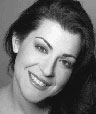
JANARA KELLERMAN, alto, also debuts tonight with the National Chorale.• She has sung with New York City Opera in Rossini's La donna del lago and Carmen, and was featured in the company's 2007-08 season Fall Gala. • She also appeared as Sharon Falconer in NYCO's new production of Robert Aldridge's Elmer Gantry. • Ms. Kellerman has sung with opera companies throughout the United States, including Opera Illinois, Opera Southwest, Augusta Opera, Des Moines Opera, Cedar Rapids Opera, San Antonio Opera, and others. • In 2008 she returns to Augusta Opera to sing Carmen, and travels to Hungary in November to sing the role of Elizabeth Procter in The Crucible. • Ms. Kellerman has sung a wide concert repertoire ranging from Bach and Handel to Honegger with orchestras across the country, and was a winner in the Liederkranz Competition.

DANIEL WEEKS, tenor, returns to the National Chorale series this evening. • New York audiences have heard him at Carnegie Hall with the Orchestra of St. Luke's and Oratorio Society, and in recital for the Marilyn Horne Foundation. • Concert appearances include the Pittsburgh Symphony, Cincinnati Symphony, Columbus Symphony, Houston and Dallas Symphonies, Louisville Orchestra, Westchester Philharmonic, Florida Orchestra, in Venezuela, and with Mexico's Xalapa Symphony. • Mr. Weeks has also sung a wide variety of roles with Austin Lyric Opera, Nevada Opera, Cincinnati Opera, Kentucky Opera, and has toured nationally with San Francisco Opera's Western Opera Theatre. • The winner of the National Federation of Music Club's Young Artists Competition, Mr. Weeks was also a national finalist in the Metropolitan Opera National Council Auditions.

GRANT YOUNGBLOOD, baritone, also returning to the Chorale's series, has been on the roster of New York City Opera since 1995, where he has sung in productions from Gluck's Iphigenie in Tauride to works by Mozart, Puccini and Verdi. • He has appeared with San Francisco Opera, Washington Opera, Central City Opera, Opera Theatre of St. Louis, Glimmerglass Opera, L'Opéra de Montréal, Houston Grand Opera, Virginia Opera and the opera companies of Omaha, Naples, Delaware, Orlando, Toledo, Indianapolis, Tulsa, Sacramento and Cleveland, among others. • He has sung with orchestras across the United States, the Jerusalem Symphony and Bucharest Philharmonic, and toured Japan with Opéra de Monte Carlo. • Mr. Youngblood has appeared in the San Francisco Stravinsky Festival and won a Shoshana Foundation Grant and MacAllister Competition Award.
MEET THE CONDUCTOR
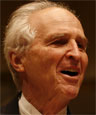
MARTIN JOSMAN, Music Director of The National
Chorale, is one of the nation's leading vocal conductors. He has conducted more
than 1,500 concerts at Avery Fisher Hall, Carnegie Hall, throughout the New
York area and across the United States. He regularly conducts an extensive
repertory of choral/orchestral masterworks, as well as opera and operetta. He has presented United States premieres of rediscovered Baroque,
Classical and Romantic era masterpieces, and a wide range of contemporary
music, including premieres of works commissioned by the Chorale for its Lincoln
Center series.
In addition to leading 40 seasons of concerts and Messiah Sing-Ins at Fisher
Hall and Carnegie Hall, Mr. Josman has conducted concerts at Boston's Symphony Hall, the Seattle
Opera House, the Philadelphia Academy of Music, Orchestra Hall in Minneapolis,
Boettcher Hall in Denver, St. Louis' Powell Hall, Symphony Hall in Phoenix, the
Eastman Theatre in Rochester, Symphony Hall in Tulsa, the Chautauqua
Amphitheatre and the Saratoga Performing Arts Festival.
Maestro Josman has toured the United States with the National Chorale, and
conducted the company in 19 summer seasons of Festival of American Music
Theatre concerts at Lincoln Center's Damrosch Park. The Chorale season also has
included Concerts for Young People, programs of historic American music, and
vocal-instrumental chamber music series. He was music director and conductor
for the ABC Television 90-minute tribute to President John F. Kennedy, and for
the PBS-Channel 13 special, "Bach and His Sons: the Overwhelming Legacy",
broadcast on more than 250 TV stations across the United States. Mr. Josman has also served as amember of the Choral Panel of the National Endowment for the Arts.